



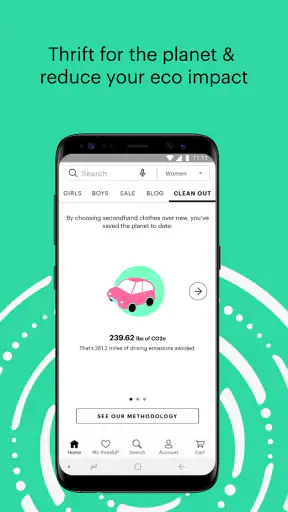
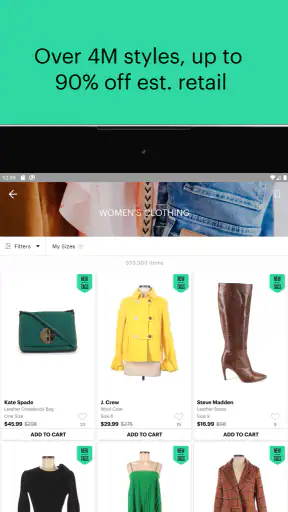
I usually approach thrift-shopping apps with two questions: can I find something genuinely useful without spending an evening scrolling, and can I trust the process enough to buy secondhand clothing online? After spending time with ThredUP: Online Thrift Store, I found an app that makes the search for women’s and kids’ clothing feel more organized than browsing a random resale feed, while still asking for patience and a careful eye. It is free to use, aimed at everyone, and developed by thredUP, Inc.
The basic idea is simple, but the experience is more involved than a normal clothing shop. You browse pre-owned items, narrow the selection, inspect individual listings, and decide whether the condition, measurements, and price make sense for you. I like that the app encourages a more deliberate kind of shopping. Instead of walking into a store and hoping the right size or style appears, I can search with a specific need in mind and compare several possibilities from home.
That convenience is also the app’s main compromise. Secondhand inventory changes constantly, so the perfect item may disappear before I am ready to buy it, while a broad search can produce more choices than I want to sort through. My overall impression is positive for people who enjoy hunting for value and are comfortable checking details before committing. It is less suitable for anyone who wants a predictable catalog, identical replacement items, or the speed of a conventional retailer.
How the current shopping experience feels
A focused alternative to ordinary clothing shopping
ThredUP sits between a traditional online clothing store and a peer-to-peer resale marketplace. The difference matters. With a regular retailer, I expect consistent product photography, repeated sizes, and a clear way to reorder the same item. With a peer-to-peer marketplace, I often have to assess individual sellers, varying descriptions, and different standards for photographing or explaining condition. ThredUP feels more like a centralized secondhand catalog, which makes browsing less personal but generally more straightforward.
I found the app most useful when I began with a purpose rather than an open-ended wish to browse. Searching for a child’s seasonal layer, a work-appropriate top, or a replacement for a worn-out everyday garment gives the experience direction. When I simply scroll without a plan, the volume of options can become tiring. The app rewards people who know how to narrow a search and who are willing to abandon an item when its details do not justify the cost.
The women’s and kids’ focus gives the catalog a practical identity. It is not trying to be a universal marketplace for every kind of product. That makes it easier for the right shopper to stay within relevant departments, especially when looking for clothing that children may outgrow quickly or pieces that do not need to be brand new. For men’s clothing or unrelated household goods, I would choose another service rather than treating this as a general resale destination.
Why filters and listing details matter so much
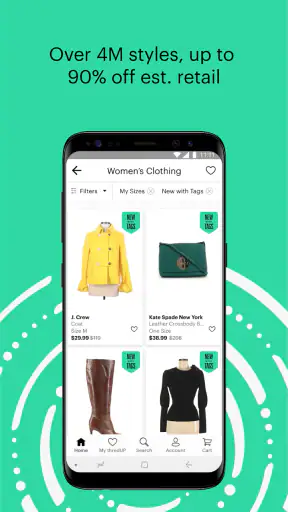
My strongest advice is to treat filters as part of the shopping process, not as an optional convenience. Size alone is rarely enough with secondhand clothing. I would also narrow by category, color, style, and condition where those choices are available, then inspect the individual listing rather than assuming every item in a search result is comparable. This is especially important for children’s clothing, where a nominal size can feel very different depending on the brand and garment type.
A useful habit is to create a short mental checklist before opening a listing. I look for the material, the cut, the visible condition, and whether the item solves the need that brought me to the app. If I am shopping for a school layer, for example, I care more about washable fabric and practical coverage than an attractive brand label. If I am looking for a special occasion piece, I pay closer attention to wear, color accuracy, and whether the design will be easy to combine with clothes already in the wardrobe.
This approach prevents one of the common secondhand-shopping mistakes: buying something because it is inexpensive rather than because it is useful. A low price does not make an item a good purchase if it does not fit the intended situation. I also avoid building an order around one uncertain item. I compare alternatives first, because another listing may offer a better condition or a more versatile color even when the first result looks appealing.
A realistic everyday use case
Imagine that a child needs several extra layers before a new school term, but you do not want to pay full retail prices for clothes that may be outgrown. I would open the app with a clear list: one or two tops, a warm layer, and perhaps a pair of trousers. I would search each category separately, filter by the needed size, and save only items that fit the child’s current wardrobe. Then I would review the condition and measurements together instead of adding the first acceptable result to the basket.
The important trade-off is time. This method can cost more attention than walking into a store and buying a new multipack, but it may reveal better variety and more individual style. It also encourages a smaller, more intentional order. If the child’s size is changing quickly, I would avoid stocking up too far ahead. Secondhand availability is unpredictable, and a bargain is not helpful if the garment is outgrown before it gets worn.
For an adult wardrobe, I use a similar workflow but add a compatibility test: can I picture at least three outfits with the item? That question is particularly helpful when browsing unusual colors, statement pieces, or unfamiliar brands. It turns the app from an endless stream of tempting finds into a tool for filling real gaps in a closet.
What the app does well for patient shoppers
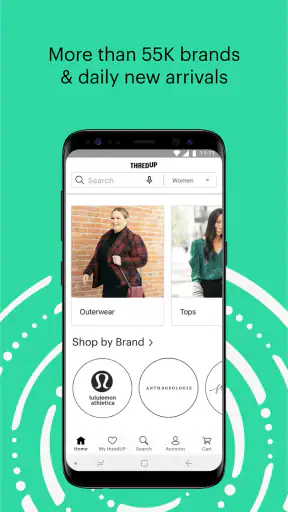
The best part of the experience is discovery. I can look for a general type of garment while remaining open to different labels, cuts, and colors. That is more interesting than visiting a single brand’s store when I am trying to spend less or reduce dependence on new clothing. It also makes the search feel less repetitive because the available selection is not built around a fixed seasonal collection.
I appreciate the ability to compare similar pieces before deciding. In a physical thrift store, I may need to visit several locations and remember what I saw. Here, I can keep the search centered on one need and make a calmer decision. The app is especially appealing to shoppers who enjoy finding something distinctive but do not want the uncertainty of arranging a purchase with an individual seller.
Another strength is that the experience supports different levels of commitment. I can browse casually, search for a specific garment, or build a more considered secondhand wardrobe over time. I do not have to change my entire shopping routine on the first visit. Starting with one practical item is the easiest way to learn whether the catalog and browsing style suit me.
Where the experience creates friction
Secondhand shopping cannot offer the same predictability as buying new clothing, and the app does not remove that basic limitation. A size filter can reduce the search, but it cannot guarantee that a garment will fit exactly as expected. Brand sizing, fabric stretch, previous wear, and personal proportions all matter. I would not use this app for a time-sensitive outfit unless I had enough room for an alternative plan.
Browsing can also become a little too tempting. The constant possibility of finding a surprising piece encourages impulse purchases, particularly when an item appears to be a bargain. I find it helpful to pause before checkout and ask whether I would still want the garment if it were not marked as a special find. This is a small discipline, but it makes the app more useful and keeps secondhand shopping from becoming another form of overbuying.
There is also a mental cost to comparing individual listings. A conventional store makes it easy to select a color and size from a standardized product page. Here, I may need to inspect several separate items that look similar but differ in condition or presentation. That extra work is worthwhile for shoppers who value variety, but it may frustrate someone who wants a quick, repeatable purchase.
How it compares with the usual alternatives
Compared with a standard online retailer, ThredUP is stronger for variety, lower-cost experimentation, and finding pre-owned women’s or kids’ clothing. A regular retailer is better when I need a precise item in a predictable size, want several identical basics, or need confidence that the same product will remain available. New clothing also tends to involve a simpler decision because the condition is not part of the comparison.
Compared with a local thrift store, the app saves travel and makes searching more targeted. I can browse from home instead of checking racks one by one. The local store still has advantages: I can touch the fabric, judge the color in person, and try something on when fitting rooms are available. Local shopping may also be better when I need something immediately and cannot wait for an online order.
Compared with a peer-to-peer resale app, ThredUP feels more suitable when I prefer a centralized shopping flow rather than messaging individual sellers. A peer marketplace may offer more direct communication or highly specific one-off finds, but it can require more effort to evaluate the seller and coordinate the purchase. I would choose based on what matters more: a more organized catalog or the personal negotiation and variety of a seller-driven marketplace.
What has changed and what that means for existing users
The app has been available since July 20, 2012, so it is not a new experiment in mobile resale. Its current version is 7.35.0, and that long presence gives the experience a sense of an established shopping service rather than a temporary trend. I see the current release as part of an ongoing effort to keep the mobile storefront usable as the inventory and browsing habits evolve, although the core task remains familiar: finding and buying secondhand clothing through a phone.
For existing users, the practical question is whether the current app still makes repeat shopping easier than using a browser or visiting a physical store. In my experience, the answer depends on how often I shop and how specific my searches are. The app is most valuable when I return with a clear category or wardrobe need. If I only browse occasionally, I may not notice much benefit beyond the convenience of having the catalog in a dedicated mobile space.
Its current version also reinforces an important expectation: updates should improve the path from discovery to decision, not encourage users to skip inspection. Whatever changes appear over time, I would still judge the app by the same standards—clear listing information, manageable search results, and a checkout process that does not make careful comparison feel like wasted effort. A newer interface cannot solve the natural uncertainty of secondhand sizing or condition.
Who should use it, and who should skip it
I would recommend ThredUP to people who want women’s or kids’ clothing at secondhand prices, enjoy comparing individual finds, and can wait for the right item. It is a particularly good match for parents who need practical clothing without treating every growth spurt as a full-price shopping event. It also suits adults building a more varied wardrobe, provided they are willing to measure carefully and think about how each piece will be worn.
I would be more cautious about recommending it to someone who dislikes browsing, needs an exact uniform item, or expects every search to produce a complete set of matching basics. It is also not my first choice for a last-minute event outfit. A local shop or conventional retailer is safer when timing and predictable fit matter more than price or discovery.
People who are uncomfortable with pre-owned clothing should not feel pressured to use it simply because secondhand shopping is economical. The app works best when the buyer genuinely accepts that each item may show individual signs of previous use and that the available selection will change. If that uncertainty causes stress, a new-clothing store will probably provide a more satisfying experience.
Practical habits that improve the results
I recommend starting with a shopping note on your phone. Write down the garment type, acceptable colors, preferred materials, and the maximum amount you want to spend before opening the app. This keeps the search from drifting and makes it easier to recognize a genuinely useful find. For children’s clothing, I would also note the child’s current measurements and how much growing room is sensible, rather than relying only on the label.
When two listings seem similar, I compare versatility before price. The slightly more expensive item may be the better choice if it works for school, weekends, and layering, while the cheaper one may remain unworn. I also look for a coherent order rather than adding unrelated pieces. Grouping items around an existing jacket, pair of shoes, or favorite trousers gives each purchase a better chance of becoming part of a real outfit.
Another useful tactic is to separate “replace” searches from “discover” searches. If a favorite garment is worn out, I search narrowly and avoid getting distracted by unrelated styles. On a different visit, I can browse more freely for unusual pieces. Mixing both goals in one session often leads to a crowded basket and a less confident decision.
What I would watch in future use
As I continue using the app, I would pay attention to how quickly I can move from a broad search to a trustworthy shortlist. The most meaningful improvement would be anything that helps shoppers compare fit, condition, and usefulness without adding more visual noise. I would also want the app to preserve a calm shopping rhythm, because secondhand discovery is enjoyable until the number of possibilities becomes overwhelming.
I would watch how well the current experience serves repeat buyers. A first visit can be exciting, but long-term value comes from finding practical items again and again. For parents, that means returning when sizes change. For adults, it means gradually filling wardrobe gaps instead of making isolated impulse purchases. The app earns a permanent place on my phone only if it continues to make those repeat searches feel worthwhile.
My final view is that ThredUP is a useful, free shopping app with a clear audience rather than a universal replacement for every clothing store. Its average rating is 3.8 from around 69 thousand ratings, and the service has passed 5 million installs, which reflects substantial interest while also suggesting that the experience will not satisfy every shopper equally. I would recommend trying it with one specific need, using filters carefully, and judging each item on fit and usefulness rather than excitement alone.
My honest recommendation: use it when you want a more organized route into secondhand women’s or kids’ clothing and have enough patience to inspect individual finds. Skip it when you need identical new basics, immediate availability, or a guaranteed fit. For the right shopper, it turns thrift browsing into a practical routine; for the wrong one, it can feel like too much searching for too little certainty.


